

Classics Corner: Why Mosquitoes Buzz in People's Ears
An example of how folktales morph when told in different cultures

I recently came across a sheet of paper with a lot of scribbling that I had written up a few weeks before my kid was born. As I read it, I realized it were some questions and answers I had asked a friend who at the time had a preschooler. I remember being so impressed by her suggestions and wondering if I would feel as seasoned as her when I had a preschooler.
Well, guess what? I am parent to a preschooler now. And I don’t feel seasoned—just more comfortable with this new pace of life. Nor do I feel experienced—except in this one specific kid. It is mind boggling to me that I’ve been a parent for this long especially since pre-kid life feels like it was just yesterday.
Now when I look at folks who are parenting elementary aged children I wonder how equipped they feel. Having solidly been a parent for almost a decade, does parenting feel different? Does the realization that you’re always going to be on your toes mean you’re more accepting of how much you don’t know and, therefore, comfortable? Or do you look to the teen and wonder what being a parent for that long feels like?
Tell me what you think in the comments!
This is the last Classics Corner of 2024. This has been such a fun series to write and I’m planning to continue it in 2025. Are there specific books you’d like to see me write about for this series?

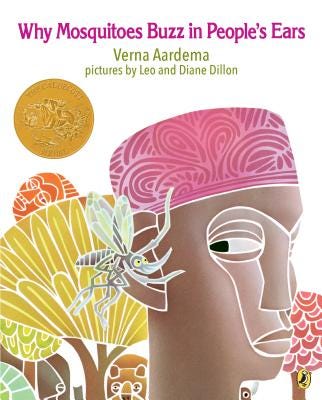
Why Mosquitoes Buzz in People’s Ears
Written by Verna Aardema and Illustrated by Leo and Diane Dillon
Recommended Ages: 5-8 years old
Buy now*
A book many Millenials may remember from their childhoods, this was an iconic classic with its lush, soft-hued watercolor cut-out illustrations that left a striking impression. A story that visits the folklore of West Africa, it attempts to answer the perennial question of why mosquitoes buzz in our ears.
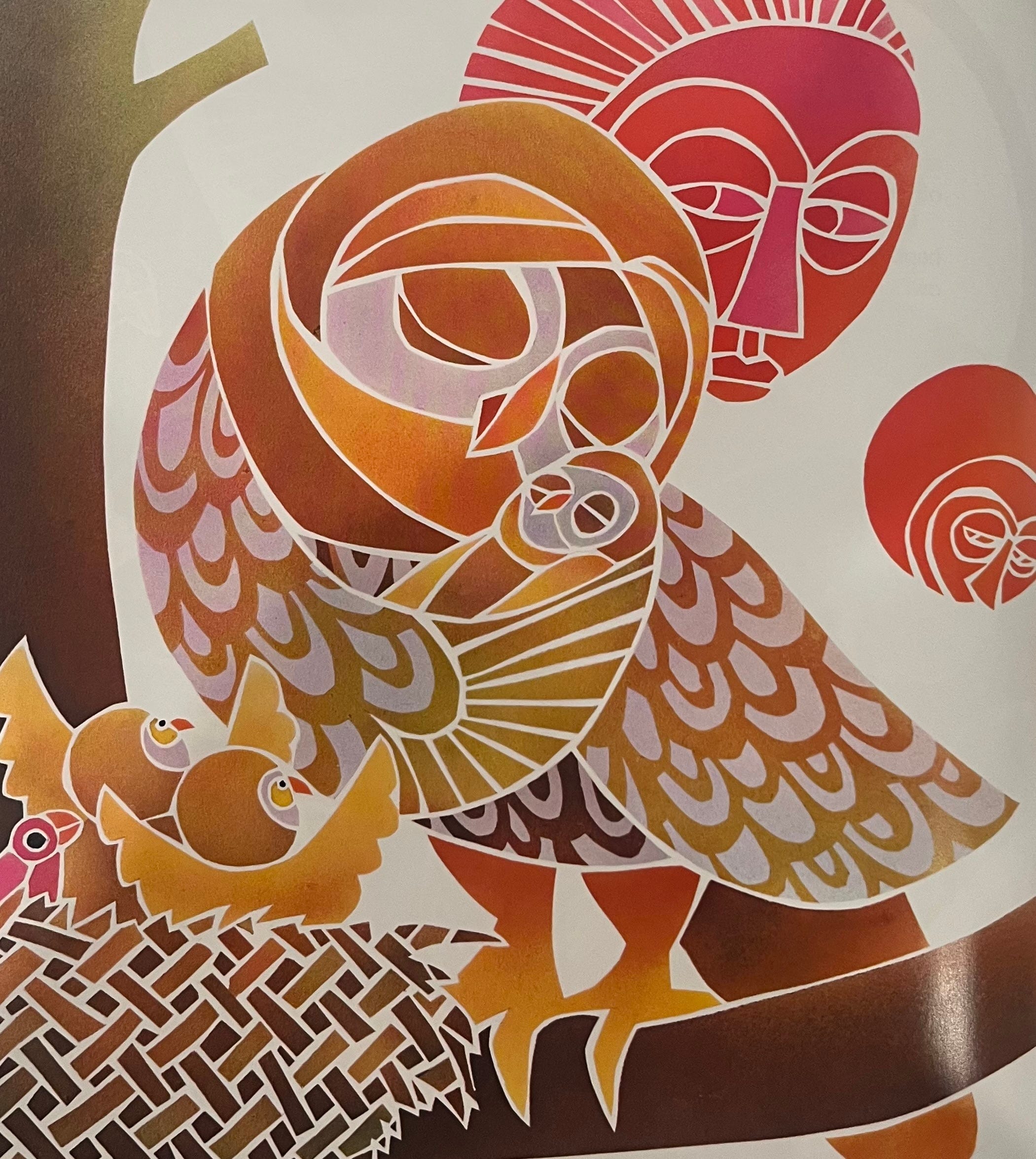
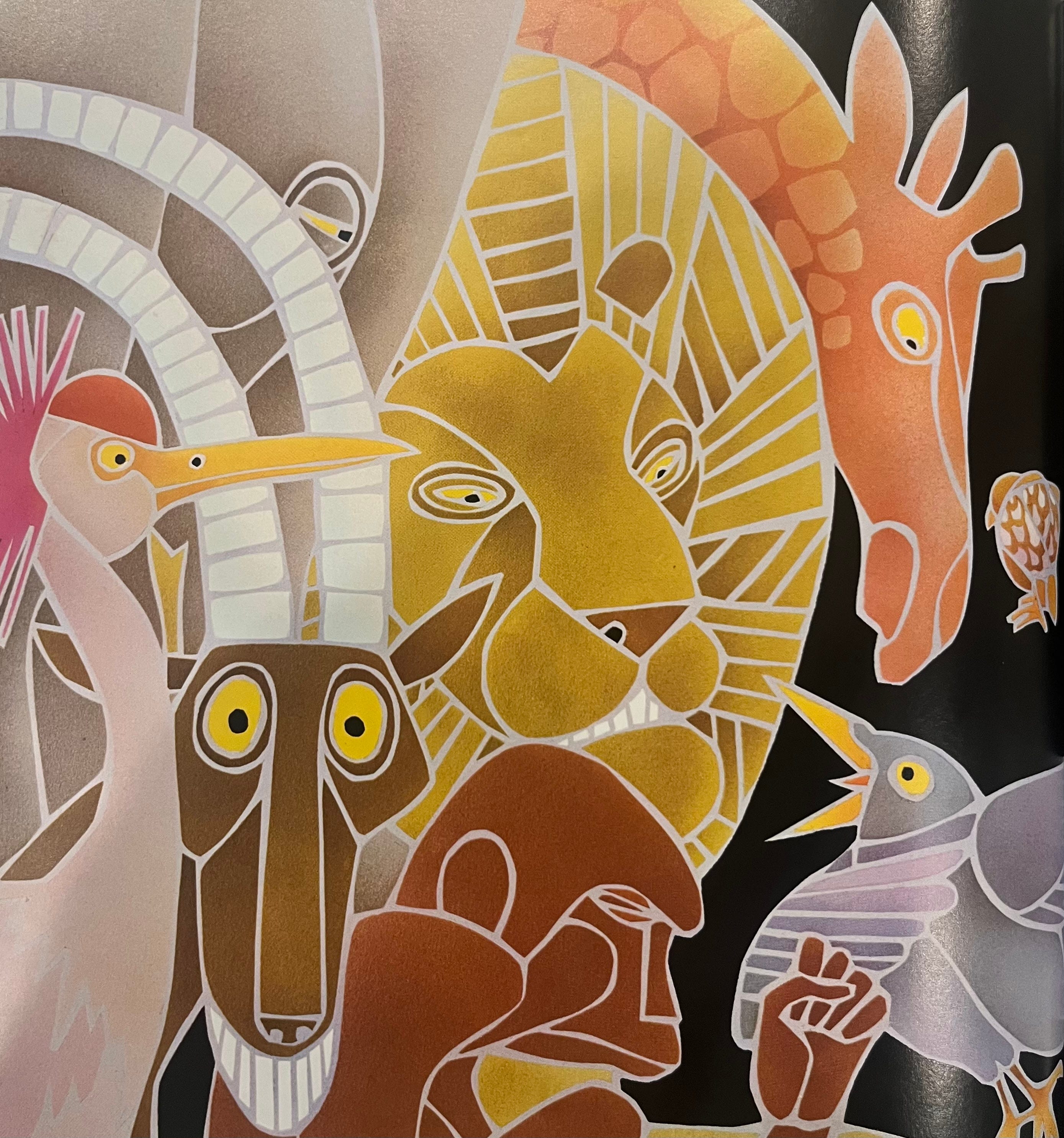
As it goes, Mosquito with a swooping “lie” sets off a chain of events that ends in tragedy: When Iguana is so flummoxed by Mosquito’s tall tale he sets sticks in his ear, and mistakenly ignores Python. Python, the sensitive creature he is, thinks Iguana is up to no good and decides to hide away in Rabbit’s burrow hole causing Rabbit to flee out of fear. And so it goes, a wheel of never-ending cause-and-effect that collapses when an owlet gets killed. Mama Owl, devastated by the loss, fails to hoot for the sun to rise to submerge the world into an endless night. As night becomes interminable, King Lion finally summons all the animals to get to the bottom of everything.
Mosquito, hiding and listening quietly to the tribunal, flees when the animals call for her punishment. That is why, of course, to this day, Mosquito buzzes in people’s ears asking if the world is still angry with her. The resounding response is all the answer Mosquito will ever need.
Aardema’s writing is unique in the way the story builds focusing entirely on the plot and world-building of the tale itself. And yet, while the story is tight it is Aardema’s use of repetitive sound/movement words (“Then [Iguana] stuck two sticks in his ears and went off, mek, mek, mek, through the weeds”), which became her signature, alluding to the oral nature of folktales. It begs to be read aloud which, as the story advances and the chain of events is recounted, turns into a frolic for narrator and reader alike.
Leo and Diane Dillon, the award-winning married artists, won the first of their two consecutive Caldecott medals for artwork that simmers with the heat of the golden-orange sun and plummets vivid animals into the ink-black depth of night. The use of color is masterful, and the gentle gradient from color to color is exquisite and breathtaking. The sharp, crisp lines demarcating the edges of shapes and characters are no less than thrilling. Anyone who beholds the Dillons’ illustrations will agree that the Caldecott they’ve won is well-earned and deserved.
My thoughts
I’m not going to bury the lede: I found this book questionable. The story itself didn’t do much for me. I enjoyed it but if not for the truly stunning illustrations, it’s one I would hardly remember years later. (In fact, I only remember this book because of how famous it is—I didn’t remember the story at all.)
As an adult approaching a folktale, my first reaction is to puzzle out the purpose or moral of the tale. What is the story trying to hint at? What is it trying to teach? Historically, the oral tradition of folktales has been used to pass down cultural traditions and interpretations of morality, often within the context of the natural world. So what is this particular story telling us? I don’t know. I keep coming up empty-handed. Is it about the mosquito’s lies? They’re so mild and if I were going to blame anyone for causing most of the problems, it would be the snake. Is it cause-and-effect? I can certainly see the case for that but it feels too much like a stretch.
If I take it at face value—an entertainingish story about the annoying phenomenon of mosquitoes buzzing—even then I find it a bit lacking. The chain of events feels too contrived and long-winded. And let’s not forget that it’s achieved at the sacrificial altar of an owlet. I don’t know. I feel like I’m missing something. If you know exactly what it’s about or what I’m missing, go ahead and tell me what you think (you can leave a comment or reply to the email)!
And perhaps what bothers me most is how genericized the origins of this story are. Aardema wrote many books about folktales from Africa and even some from Mexico. Now Aardema never actually traveled to Africa and had no first-hand experience with African folktales. Most of her knowledge came from things she’d heard from missionaries at her church and a general interest in the continent. Her first foray into an African folktale was creating one to encourage her toddler daughter to eat her dinner. The fact that she had no direct experience or exposure, or even someone who could provide her with the necessary cultural context, doesn’t sit well with me. Additionally, the fact that the story cannot be attributed more directly to a specific culture or country makes the whole experience even more eyebrow-raising.
West Africa comprises around 15 countries. I’ve looked and looked but can’t seem to find the cultural origins of this tale. The closest I could find is an Igbo tale that explains why mosquitoes buzz in people’s ears but it is vastly different from Aardema’s story. The Igbo people are from Nigeria, one of the biggest countries in Western Africa. The only similarity between the Igbo tale and Aardema’s is that both try to explain why mosquitoes buzz.
So is Aardema’s tale truly a West African folktale? I really don’t know. There’s enough (or actually lack of) evidence to suggest it may be mostly her own fiction. So maybe the real lesson in Why Mosquitoes Buzz in People’s Ears is that stories morph the more they are told. In Aardema’s book, it took seven animals’ worth of changes to drastically change the narrative. In real life, it seems like only a hint of the story was needed for it to become fundamentally different.
“Aardema knew what she was doing, and told others. For distribution at public appearances, she had a set of directives titled “How to Tailor African Folktales to Fit American Children.“ —Barbara Bader in Krik, Krik, Krik: How Aardema & Co. Attuned Us to African Folklore
Consider becoming a paid subscriber to support my work and make reading a fundamental part of every child’s life. Your support keeps me fed and caffeinated so I can do more of this work I love!
Conversation starters
Do you think the mosquito was telling a lie?
Do you think the mosquito was wrong and caused the whole mess?
What do you think a mosquito says when it buzzes in your ear?
Interesting facts
A fun interview about the Dillons by the Dillons!
You can watch an Igbo influencer share the original folktale here
An excellent article on the authenticity of Aardema’s African folktales
Let’s Talk…
Do you think folktales from other parts of the world need to be adapted to suit American audiences?
If you’re a parent, how does parenting feel now that you’ve got “X” number of years under your belt?
What books would you like me to cover in future editions of the Classics Corner?
*Thank you for using (at no additional cost to you) the affiliate links in this post! :-)
"...a mix of herbs, a little bit of Vicks, and just a teensy hint of staleness." Such a vivid description of a granny. Love this post.
I think as a parent of 13+ years, I've just known my kids for so much longer that I understand them better. So no more or less confidence in myself, just more information. Also, I can see the end of childhood on the horizon, especially as someone who went to college at 17, and I want to make sure I am in this moment. No looking ahead, just love right now. Our house is full (FULL!) of sibling bickering and occasional meltdowns, but my big kids are generally good company, funny, and helpful. Soak it up, it doesn't last.